
Do you remember the first time you saw an AI-generated video?
If you’re anything like me, you probably stared at your screen in a mix of absolute awe and sheer, unadulterated terror. Characters morphed into blobs of flesh, backgrounds warped like a funhouse mirror, and let’s not even talk about the hands, the terrifying, seven-fingered hands.
Yet, beneath the creepy, uncanny-valley aesthetic, there was an undeniable spark of magic. We were witnessing the birth of a new medium. We were watching still images breathe, move, and come alive.
Fast forward to today, and the landscape of AI image-to-video and text-to-video software has evolved at a breakneck speed that Moore’s Law couldn’t even dream of predicting. We have gone from generating a few seconds of blurry, morphing pixels to standing on the precipice of technology so advanced that billion-dollar movie studios are holding emergency boardroom meetings.
Whether you are a nostalgic early adopter who misses the chaotic early days, or a newcomer curious about how to turn your wildest imaginations into cinematic reality, buckle up. We are going to take a journey through the past, the present, and the mind-bending future of AI video generation.
The image on the left is from 2025, and the image on the right is from 2026. You be the judge of which one is better, and why?
PART 1: THE PAST (The Wild West of Warping Pixels)
It feels like a lifetime ago, but the first real wave of public AI text-to-image software dropped roughly three-and-a-half years ago (DALL-E 2 by OpenAI, as a public beta phase in July 2022). And Runway is credited with the first publicly accessible AI video generation tools (image-to-video and text-to-video) in February 2023.
When platforms like early Runway (Gen-1 and Gen-2), Deforum for Stable Diffusion, and Pika Labs first entered the public consciousness, they were little more than digital toys for tech enthusiasts. The premise was simple but revolutionary. Upload a still image, perhaps a Midjourney generation of a cyberpunk city or a photo of your dog. Type a few words, and watch the AI animate it.
The Nostalgia of the “Spaghetti Era”
For those of us who were there, the nostalgia is deeply real. Do you remember the infamous “Will Smith eating spaghetti” video? It was the defining cultural touchstone of early AI video, a horrifying, hilarious, physics-defying clip that proved two things. AI video was possible, but it had a long way to go.
In those days, getting a coherent 3-second clip felt like winning the lottery. You’d upload an image of a stoic knight, and the AI would somehow turn his sword into a baguette while his horse melted into the background. But when it worked? It was euphoric. It was the closest thing to digital alchemy.
“Garbage In, Garbage Out” and the Rise of AI Slop
However, as the software became more accessible, it revealed a fundamental truth of computer science: Garbage In, Garbage Out (GIGO).
AI software is essentially a mirror reflecting the quality of instructions it receives. To get a masterpiece, you needed to craft an intricate, highly researched prompt. You needed to understand camera angles (e.g., panning, tracking shot, 35mm lens), lighting (volumetric, cinematic, golden hour), and motion scales.
Most people didn’t want to do the work. They typed “cool robot fighting” and hit enter. Because the AI lacked proper context, it spat out chaotic, low-quality nonsense.
This birthed the era of “AI Slop.”
Almost overnight, platforms like YouTube, TikTok, and Instagram were flooded with junk. Opportunists and content farms realized they could generate hundreds of low-quality, bizarre videos a day to game the algorithms for ad revenue. We saw a deluge of fake historical events, bizarre children’s content, and hyper-sensationalized fake news clips.
This misuse caused massive societal backlash. A significant portion of the public became vehemently anti-AI. They didn’t view the technology as a tool for artists, they saw it as a spam generator that threatened truth and cluttered the internet with synthetic garbage. The “slop” era threatened to derail the legitimate progress of the medium, hiding the incredible potential of the tech behind a wall of lazy, prompt-poor content.
Asterix and Obelix short video clip of 2024. (Made with Minimax).
Asterix and Obelix short video clip of 2026. (Made with Grok Imagine).
PART 2: THE PRESENT (The Golden Age of Creation)
As we look at the landscape up to the end of 2025, the dust from the “AI Slop” era has begun to settle, revealing a matured, incredibly powerful ecosystem. The companies that survived the early wars, alongside titans like OpenAI (with Sora), Kuaishou (Kling), and Luma, have completely rewritten the rules of what is possible.
Today, AI image-to-video is no longer a party trick. It is a fundamental tool for digital creation.
The Leap in Duration and Coherence
We are no longer fighting for 3 seconds of stable footage. The current standard easily handles 5-seconds, 10-seconds or longer clips with stunning consistency, and with clever prompting and extension tools, creators are stitching together seamless videos that last for minutes.
The physics have largely been solved. Water flows like water. Reflections in mirrors actually match the subjects. If you prompt an image of a woman walking down a neon-lit Tokyo street, her legs move naturally, the lighting dynamically shifts across her face, and the background remains structurally sound.
Quality In, Quality Out: The Prompt Engineer’s Triumph
The current era has proven that Quality In equals Quality Out. The anti-AI sentiment has softened among creatives who realized that AI doesn’t replace the director, it empowers them.
Today’s most successful users treat prompting like an art form. They spend hours researching cinematography terminology, testing seed numbers, and dialing in motion weights. This dedication is what separates the breathtaking, award-winning AI short films from the lingering “AI slop” of the past.
Making Life Better for Millions
The societal impact of the current software cannot be overstated. It has democratized high-end video production.
Small Businesses: A local bakery that couldn’t afford a $10,000 ad agency can now generate a stunning, mouth-watering 10-second slow-motion clip of frosting being poured over a cake, simply by animating a still photo.
Educators: Teachers are animating historical paintings to keep students engaged in history class.
Indie Filmmakers: Writers and directors are creating Hollywood-level pitch decks, allowing them to secure funding for independent films by showing investors exactly what the movie will look like.
For millions of people, AI image-to-video has removed the financial and technical barriers between their imagination and reality. It has made the creative process easier, faster, and infinitely more expansive.
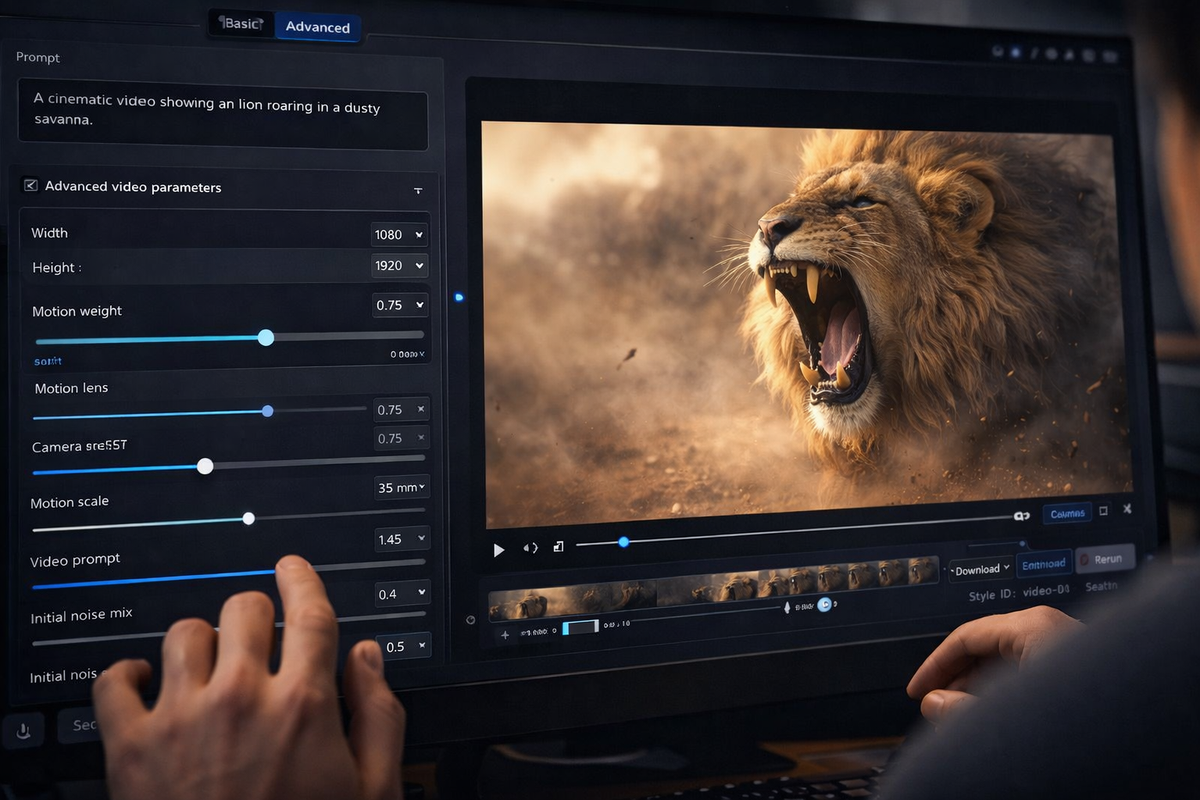
A generated image of a behind the-scenes look at an AI prompting interface, showing complex parameters, motion sliders, and a high-quality generated image. (AI image generated with ChatGPT).
PART 3: THE FUTURE (Seedance 2.0 and the Hollywood Panic)
If you think the current state of AI video is impressive, you need to take a deep breath and brace yourself for what is coming.
For the last few weeks, the internet has been completely on fire. A small, highly curated group of tech podcasters, elite influencers, and visual artists were given closed-beta access to the highly anticipated Seedance 2.0.
The official public world wide release date is currently slated for February 24, 2026, and to say the world is holding its breath would be the understatement of the decade.
The Viral Leaks
Over the past month, leaked clips from the Seedance 2.0 beta and from China who are already using the software have gone viral, amassing hundreds of millions of views. Podcasters are dedicating long episodes just to breaking down 10-second clips. Why? Because the jump in quality with Seedance 2.0 isn’t just an iteration, it is a quantum leap compered to what is currently available.
Seedance 2.0 has completely shattered the uncanny valley. The image-to-video translation is so flawless that it is virtually indistinguishable from footage shot on an ARRI Alexa camera by a world-class cinematographer.
Hollywood in a Panic
Rumors are swirling out of Los Angeles that major movie production companies are in a state of absolute panic.
Until now, Hollywood executives viewed AI video as a helpful pre-production tool, good for storyboarding or generating background plates. Seedance 2.0 has changed the math. The software handles micro-expressions, complex physics (like wind blowing through individual strands of wet hair), and emotional character consistency with terrifying perfection.
A solo creator sitting in a coffee shop with a laptop can now generate a 60-second action sequence that would traditionally require a $5 million budget, a stunt team, a CGI department, and three weeks of shooting.
How does Seedance 2.0 leap so far ahead of the current competition?
Semantic Physics: It doesn’t just guess what the next pixel should be. It understands the 3D volume, weight, and material of the objects in the image.
Audio-Visual Syncing: It generates highly realistic foley audio, ambient sound, and lip-syncing natively alongside the video generation.
Prompt Intuition: It features an underlying “director’s brain” that auto-corrects bad prompts, meaning the gap between “Garbage In” and “Quality Out” is closing fast. It bridges the technical gap, almost entirely eliminating the risk of accidental “AI slop.”
When Seedance 2.0 drops on February 24th, it is going to fundamentally change social media, journalism, and the entertainment industry forever. The power of a multi-million dollar movie studio will be handed to anyone with a Wi-Fi connection and an imagination.
Sahara desert Book Trailer made with ChatGPT (images) and with Grok Imagine (video). A breathtaking, hyper-realistic, cinematic AI video clip representing the current capabilities of AI text-to-image and image-to-video, showcasing excellent lighting, physics, and emotion. Now image how this video clip will look like if it is generated by Seedance 2.0?
PART 4: THE FAR HORIZON (10 to 20 Years From Now)
So, where do we go from here? If we went from “Will Smith eating spaghetti” to Seedance 2.0 in less than four years, what does the world look like 10 or 20 years from now?
By 2035 or 2045, the concept of “generating a video clip” will seem as archaic as renting a VHS tape.
We are moving toward the era of Real-Time Generative Interactive Media. In 10 to 20 years, AI won’t just be generating 10-second clips. It will be generating feature-length, personalized entertainment on the fly.
Imagine coming home from work, putting on a lightweight pair of XR (Extended Reality) glasses, and saying, “Generate a two-hour sci-fi mystery movie starring me and my best friend. Set it in a futuristic Neo-Paris. Make the tone similar to Christopher Nolan’s films, but with the color palette of Blade Runner 2049.”
Within seconds, you won’t just be watching the movie, you will be inside it. The AI will render the environment, the narrative, the script, and the physics in real-time, responding to your choices.
The division between video games, movies, and social media will completely dissolve into one unified, generative experience. We will no longer be passive consumers of media, we will be the gods of our own digital universes. The software will become a seamless extension of human thought, translating our dreams into shared digital realities instantaneously.
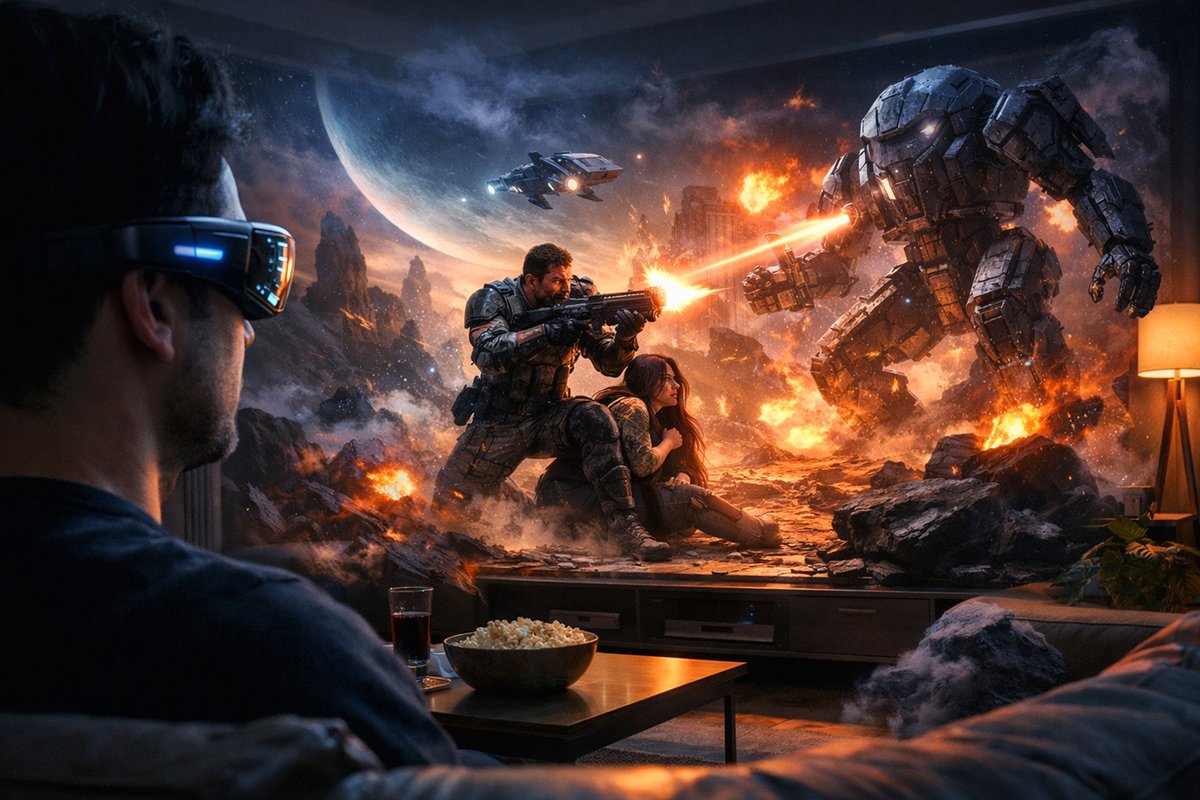
A futuristic concept art piece showing a user wearing sleek AR glasses, with a glowing, fully realized holographic movie scene projecting into their living room. (Image made by ChatGPT).
★ Sluit Aan by Panther Ebooks op Substack ★
Ontvang eksklusiewe nuwe hoofstukke, agter-die-skerms navorsing en gratis e-boeke direk in jou e-pos.
Sluit Gratis Aan op Substack →Conclusion: The Magic is Just Beginning
Looking back at the short, chaotic, and beautiful history of AI image-to-video software, it’s easy to get overwhelmed. We’ve fought through the era of AI slop, mastered the art of complex prompting, and now stand at the gates of a cinematic revolution with Seedance 2.0.
But stripped of all the technical jargon, the neural networks, and the Hollywood panic, what we are really talking about is human expression.
This software has given millions of people a voice. It has given the storyteller who couldn’t afford a camera the chance to share their vision. It has turned the mind’s eye into a tangible, shareable reality.
If you haven’t yet dipped your toes into the world of AI video generation, there has never been a better time. Yes, it takes patience. Yes, you will have to learn how to communicate with the machine to avoid the dreaded “Garbage In, Garbage Out.”
But the first time you craft the perfect prompt, hit generate, and watch your wildest imagination come to life on your screen in glorious, high-definition motion?
I promise you, you’ll never look at the world the same way again.
What are your thoughts on the upcoming release of Seedance 2.0? Are you excited, or do you think Hollywood has a right to be terrified? Let me know in the comments below, and don’t forget to subscribe for FREE for more deep dives into the future of creative AI!
Copyright © 2026 Panther Ebooks. All rights reserved.