★ Sluit Aan by Panther Ebooks op Substack ★
Ontvang eksklusiewe nuwe hoofstukke, agter-die-skerms navorsing en gratis e-boeke direk in jou e-pos.
Sluit Gratis Aan op Substack →Below is a free preview of the opening chapter of The Scarlet Riders.
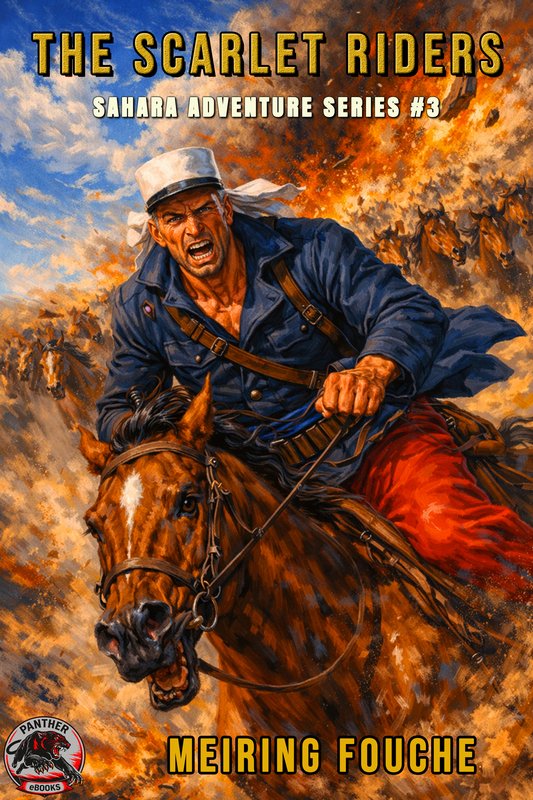
THE SCARLET RIDERS
Chapter 1: The Strangers
“This is all utter nonsense,” grumbles Fritz Mundt, the German, the largest and strongest man in the French Foreign Legion, as he pulls out an enormous red silk handkerchief and wipes the sweat from his broad neck. He supposedly received this garish handkerchief once in Algiers from a cheerful Algerian widow, who subsequently relieved him of all his holiday pay after he had downed a third bottle of sour wine. “A medal has to be given to some old Arab, and then we have to slog for miles through the sand and heat to go give it to him. Why couldn’t D’Arlan just take a horse and deliver the lousy medal himself?”
“You’ll complain yourself to death yet, big fellow,” says Teuns Stegmann, the tall, blond South African slogging through the searing Saharan sun beside the German. “You ought to feel honoured that the Capitaine chose a few of us to accompany him on this mission. This is a special assignment, and old El Abbas deserves to receive a medal from the French government. You can almost count loyal Arabs on one hand, and old El Abbas is one of them. Tomorrow he turns seventy, and he has never caused the Foreign Legion any trouble. He is a good friend to France, so give the devil his due.”
“What about the colonel, couldn’t he perhaps have delivered this wretched medal too? He could just take a horse.”
“Because Colonel Le Clerq has other duties,” mocks Jack Ritchie, the Englishman walking on Fritz’s other side. “The colonel has more to do than hand out medals. That’s why he sent D’Arlan. Besides, who knows what pretty little thing you might not run into tonight in the oasis El Wadak...”
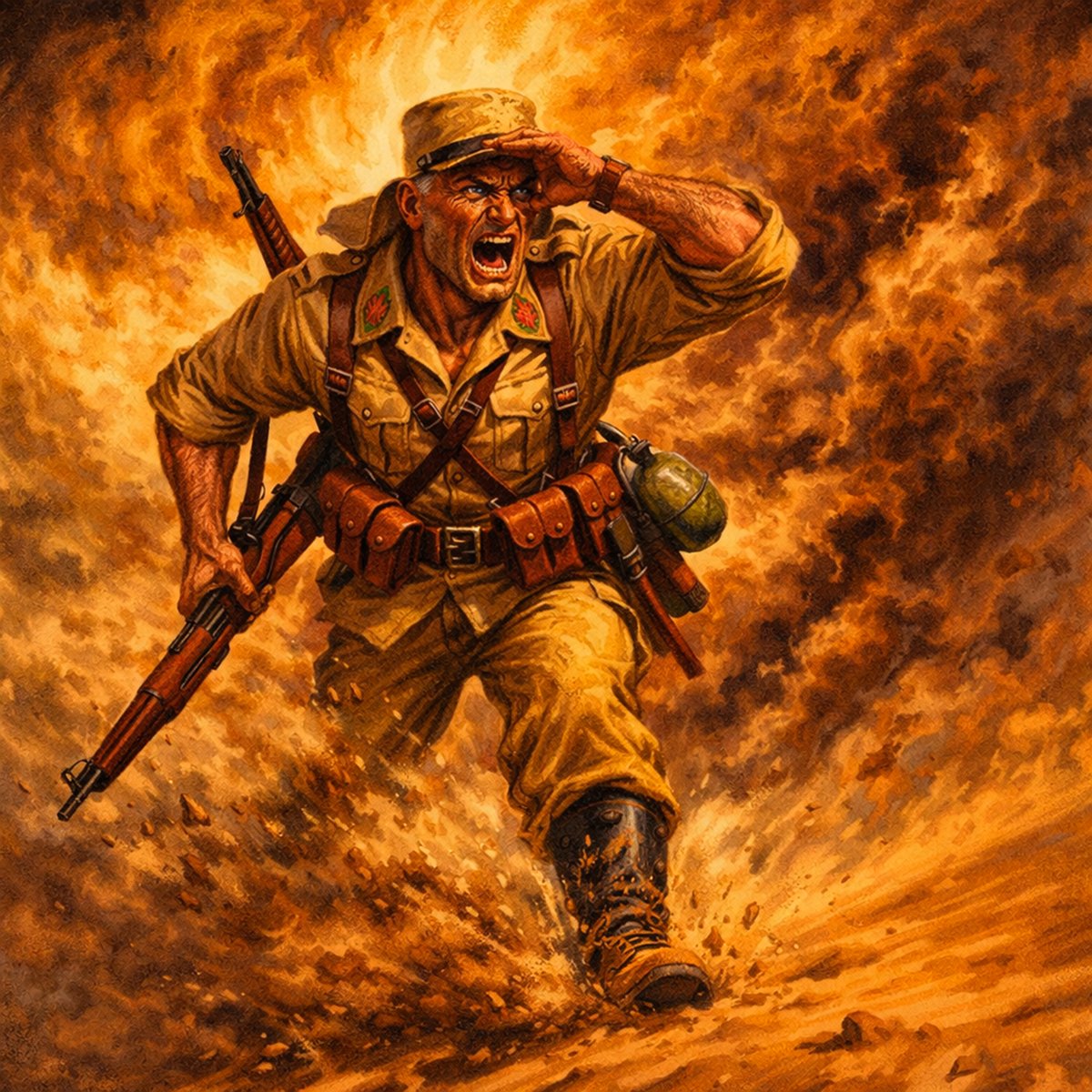
Fritz just snorts, and it is perfectly clear that all this talk does nothing to alleviate his concerns. He walks on silently, staring ahead through the heat. He sees Captain D’Arlan’s kepi’s long white neck-cover fluttering in the light breeze, where he strides at the head of his small column of twenty men through the burning sand.
“Just take a sip of water, Marshal Rommel,” jests Podolski the Pole from behind Fritz, offering his water flask. Fritz’s own flask had been empty for an hour already, as it takes a lot of water to keep his large frame going.
Fritz snatches the flask from Podolski’s hand and takes a large gulp. The next moment, he jerks forward, coughing and sputtering, because Podolski had laced his water rather strongly with brandy. Fritz practically bellows as he coughs and chokes, and D’Arlan, the small, sunburnt man at the head of the line of men, is just about to turn around to see what is happening, when his eye catches something else...
“Halt!” calls the captain commandingly, and the men need no second invitation to stop. They lean on their long rifles and then, for the first time, truly look up. The sun hangs low above the western horizon, and a cool breeze has risen from the direction of the Atlas Mountains, which tower far to the right through the blue haze.
“What the devil,” says D’Arlan, raising his binoculars to his eyes.
They are on a large sandy plateau, as flat as a tabletop. But near the southwestern end of the plateau lies a long, steep dune, formed during last week’s sandstorm.
D’Arlan walks a few paces forward as if thinking he might see better that way.
He quickly adjusts his binoculars.
Is he seeing things, dreaming dreams?
It simply cannot be! No, his senses must be deceiving him.
Legionnaires... No! And yet it is... What on earth is going on?
The men all see it with their naked eyes, although they cannot discern the details as well as D’Arlan. Bent far forward, Fritz Mundt walks quickly towards the captain, stops beside him and says, “Mon Capitaine, what on earth is going on now? Those are Legionnaires... and yet...”
“I wish I knew what was going on here,” says D’Arlan. “It leaves me utterly bewildered...”
The men all draw closer, their necks craned forward, and form a semicircle around their commander.
Around the point of that dune, perhaps a mile ahead of them, a line of camels had come running, at full speed, their tails in the air. When the men first saw them, those camels were moving as if the devil himself were behind them. On each of those camels is a rider, and on some, even two.
And then the horsemen came out from behind the dune... They move up alongside the line of camels, as if intending to surround the camel riders.
And then the shots began to ring out.
One camel after another is brought down, collapsing in a cloud of dust.
All this is a mystery to D’Arlan.
But the greatest mystery for him is that those riders are soldiers of the Foreign Legion! Yes, those horsemen are soldiers of the Legion.
And it is they who are shooting. They are busy shooting down those camels one after another!
“Mon Dieu!” sighs D’Arlan, staring intently through the binoculars. “Are you seeing what I see?”
“Oui, Capitaine,” say the group of men in unison.
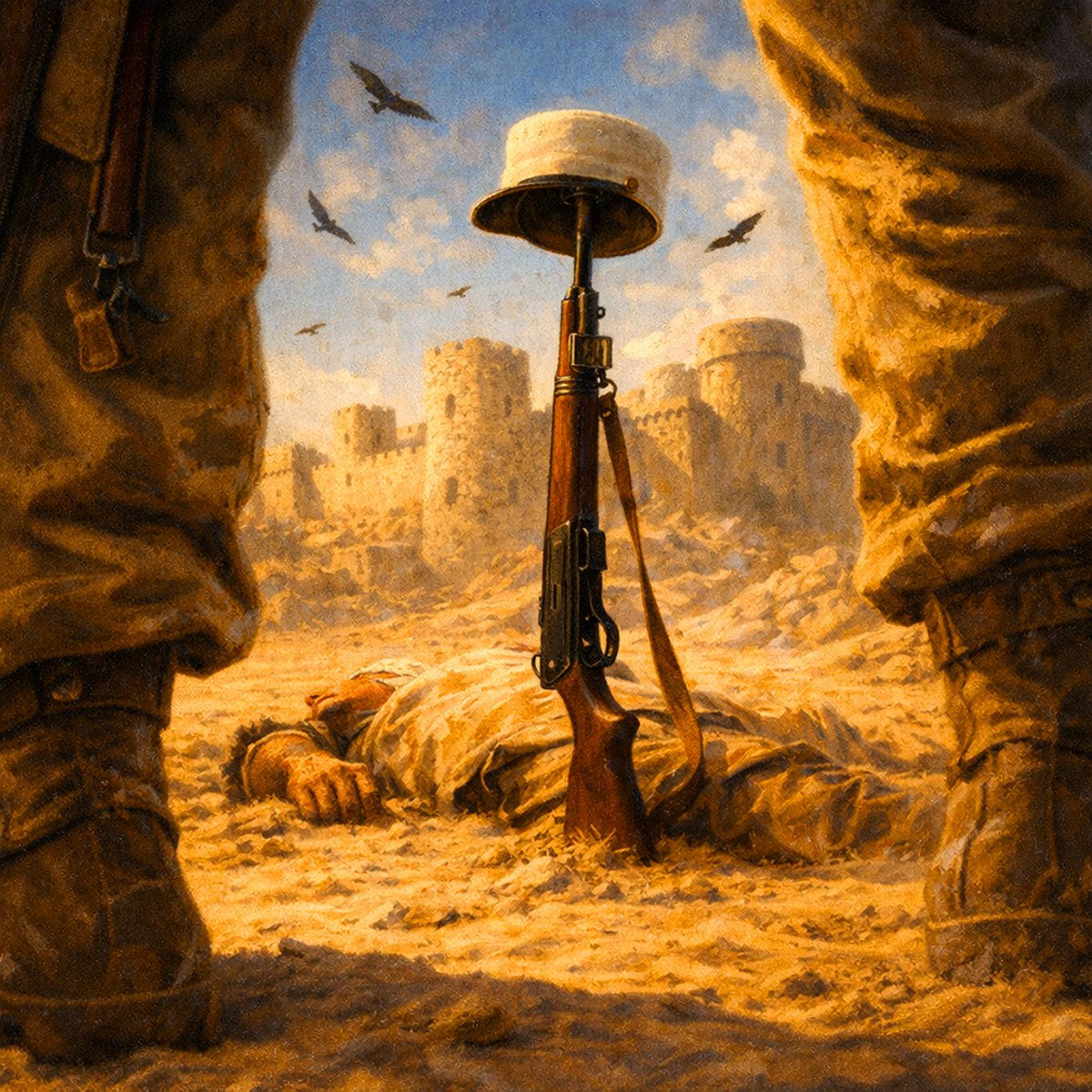
“But there are no Legionnaires in this vicinity! We are the only patrol currently outside Dini Salam. And the next closest fort is 250 miles from here. And yet, those are Legionnaires. Look at their cloaks, look at their kepis... They are wearing blue trousers...”
“They are, without the slightest doubt, Legionnaires,” says Fritz Mundt, choking again on Podolski’s brandy.
The shooting has now ceased, and the remaining camels have been brought to a standstill. The group of about fifteen camels is now completely surrounded by the horsemen.
In the light of the late afternoon sun, they see the short flashes and know that the Arabs on the remaining camels are apparently trying to offer resistance with their curved knives. However, it does not last very long.
“Forward!” D’Arlan suddenly commands and begins to trot through the heavy, loose sand in the direction of this strange spectacle before them. The men follow him at a comfortable trot, for although they are dead tired after today’s long march through the consuming heat, they now feel excited to see what is going on here.
While running, D’Arlan draws his large German Luger revolver and fires three short shots in succession into the air.
This causes a stir among the group there before the point of the dune. A few of the riders break away from the group and gallop a short distance towards D’Arlan and his men. Then they halt again and turn around.
The next moment, there is movement. The riders have formed a circle with the remaining camels between them. They wheel around and begin to move rapidly back in the direction from which they had just come.
D’Arlan shouts at them to wait. He fires a few more shots, but the strange caravan pays no heed to D’Arlan.
Within a few minutes, they have disappeared again behind the point of the dune.
D’Arlan suddenly stops in the sand, out of breath. “Well, strike me dead!” he says. “I’ve seen many strange things in the Sahara, but this is surely the strangest spectacle I have ever witnessed.”
“Perhaps those men come from Fort Metz,” suggests Teuns Stegmann.
D’Arlan shakes his head slowly. “Fort Metz is located at least two hundred miles to the east, mon Legionnaire... What would they be seeking here? And even if they were men from Fort Metz, they wouldn’t move in this area without informing Colonel Le Clerq. After all, he commands this territory.”
“Besides,” interjects Jack Ritchie, “if they are men from Fort Metz, why turn tail and flee when they see a column of the Foreign Legion approaching?”
“Yes, that is the most remarkable part of it all,” sighs D’Arlan as they now stride quickly towards where the five or so dead camels lie. “Legionnaires surely wouldn’t run away from Legionnaires, would they?”
“A strange affair,” says Fritz Mundt, biting off an enormous quid of tobacco to rid his palate of the taste of Podolski’s peculiar brandy. “A very strange affair... and yet they are Legionnaires...”
Five camels lie dead in the sand, but not a single Arab!
D’Arlan stops beside a pool of blood... and he looks from the drag marks to the bloodstain and then at the tracks. He looks up questioningly at Teuns Stegmann, who has come to stand beside him.
“Wounded, that Arab is wounded, mon Capitaine,” says Teuns. “But they apparently took him along. Even though they were in such a hurry...”
“Who says it wasn’t one of the horsemen who fell here?” asks D’Arlan, testing this brave South African’s powers of observation.
“The tracks here prove that this man fell from a camel, mon Capitaine, and the tracks further show that he was then lifted onto a horse,” says the tall, blond man with a faint smile.
D’Arlan claps him lightly between his broad, angular shoulders and says appreciatively, “Correct. You ought to be in the secret service of the Foreign Legion, mon ami...”
“I am perfectly happy as a legionnaire under Capitaine D’Arlan,” says Teuns, embarrassed. Then he springs a few paces away, bends down quickly, and picks something up from the sand.
Teuns’s face contorts with astonishment. With intense concentration, he stares at the object in his hand... The object that the camels and horses had almost trampled under the sand during the brief struggle here.
Step by careful step, Teuns walks towards D’Arlan. “Mon officier,” he says softly and hoarsely, “just take a look at this!”
D’Arlan practically snatches the object from Teuns’s hand, and then all the men gather around him, staring at the object in D’Arlan’s hands.
“Good heavens!” D’Arlan exclaims loudly. “What on earth is going on here? This is a Metro, one of the very latest rapid-fire revolvers being made. It has just appeared on the market. They say it shoots like a modern machine gun... Just look at its cylinder... It must hold at least fifteen small, high-velocity bullets... Three weeks ago in Dini Salam, we received details about this fellow.”
“Where could these people have obtained it, mon Capitaine?” asks Jack Ritchie, voicing the question on the minds of all the other men.
“The devil alone knows,” says D’Arlan. “But of two things I am absolutely certain of. This firearm has not yet been issued to the Foreign Legion, and I would be surprised if simple camel drivers, like those who were apparently intercepted here, would carry such a modern weapon.”
“That makes the mystery even more interesting,” says Fritz Mundt, his blue eyes sparkling, for if there is one thing this big German enjoys, it is secrets.
“I tell you, there’s a major screw loose here,” says D’Arlan, walking towards the nearest camel. “Come, open this one’s pack,” he orders the men.
They immediately loosen the ropes around the pack on the dead camel. And what they pull out confirms D’Arlan’s suspicion that it was merely an ordinary trading caravan that had been intercepted here. From the pack come dates... sweets... pieces of silk... linen... tobacco... a leather bag of Arab wine... beads...
There is nothing else of particular note inside.
They also examine the packs of the other camels. It is exactly the same story there. They contain only common merchandise.
“Hmm,” says D’Arlan when they have finished, “this caravan was probably on its way to old El Abbas at El Wadak. These goods were likely all intended for the festivities related to the presentation of the medal...?”
Then the captain looks down along the high dune and sees the column of dust heading in a south-westerly direction, but the strange riders are no longer visible, for they have descended from the plateau and disappeared among the chaos of smaller dunes below it.
“If only we had been closer,” D’Arlan says then, disappointed. “Then perhaps today we might have uncovered a great secret here. Come, let us push on to El Wadak. El Abbas expects us. And perhaps he will be able to shed light on this peculiar event.”
D’Arlan suddenly swings south-eastward and now sets a brisk pace. He walks with the old suppleness for which he is known. He carries the strange revolver in his hand, and the men notice him glancing at it occasionally.
Before long, they reach the south-eastern edge of the plateau, and there below them, barely half a mile further, lies El Wadak, a green deliverance in the infinite wasteland of sand and heat.
The wind, now striking them diagonally from behind, lifts the flaps of their kepis and blows them over their heads from behind. It is the cool evening wind that blows every night from the direction of the Atlas Mountains, always bringing relief after the exhausting torment of the day’s scorching heat.
The men are now practically executing a rapid march, but they do not mind, for their hearts leap at the sight of the green oasis, the view of green palm trees, the thought of delicious, fresh, cool water, the prospect of rest in the delightful shade, and the memory of the tasty fresh, roasted goat meat that old El Abbas always serves the men of the Legion. The old Arab always treats the Legionnaires like princes when they come here. He is one of the few of the old guard remaining, one of those not yet inspired by excessive Arab nationalism. One of those who believes that the protection of France is necessary and that the guidance of Western civilization cannot yet, and must not yet, be dispensed with by these semi-wild tribes.
Yes, old El Abbas is a friend of the Legion. Many of the men who have been here at El Wadak before are now walking along, mouths watering, as they think of how the old man always treated them to heaps of fresh food, delicious cold calabash milk, and cool Arab wine that isn’t as sour as what one finds in many other places. Furthermore, they also think of the captivating spectacle of the dancing Arab girls with their veils, their brown arms, their swaying bellies, and their glistening, jet-black hair swinging low around their hips.
These reveries make most of the men quickly forget the peculiar spectacle they witnessed just a short while ago atop the plateau. They yearn for the delights of El Wadak, and in their minds, they again see the friendly old face of El Abbas, the dignified old man with the deep lines across his aristocratic face and the white goatee that trembles slightly when he laughs.
Fritz Mundt rubs his hands together once. “Tonight we’re going to celebrate, my friend,” he says in broken French. “Tonight we forget all the worries of the Sahara. Or what do you say, Teuns Stegmann?”
“Tonight we can finally sleep well again, big fellow,” says Teuns, but there is no particular enthusiasm in his words, and he doesn’t lift his head as he speaks.
“You, of course, are only interested in the dancers, Fritz Mundt,” teases Jack Ritchie.
The German looks down somewhat contemptuously at the blond Englishman and says, “And you’re only interested in the dates and goat spine, you glutton!”
The men begin to laugh softly, somewhat cautiously, because although D’Arlan relaxes discipline considerably on these desert marches, he allows not the slightest lapse when the men approach an Arab hamlet or village. Then everything must be shipshape, and not a word may be spoken.
While the men are still laughing amongst themselves about Fritz and Jack Ritchie’s exchange, they suddenly fall silent. There is no specific, observable reason for it. They fall silent due to a kind of instinct that almost all these desert fighters have acquired over time. It is suddenly as if they all feel they must be quiet and pay attention.
They also all suddenly become aware that D’Arlan is walking slower while staring intently at the oasis ahead of them. They are now not much more than two hundred paces from the clay huts of El Wadak.
Just this side of the hamlet, on the open sand, is a peculiar structure. D’Arlan stumbles as he stares at it. He cannot quite make out what it is. He wishes the sun were still a bit higher. The light has become deceptive, as the high sand plateau already casts its massive shadow over the oasis here.
D’Arlan looks away again from this strange phenomenon. He glances over the clay huts, over the swaying palms of the oasis, but sees nothing. Everything is exceptionally quiet, and that too is strange...
This is the time of day when the Arabs begin to stir. When the first evening coolness descends over the Sahara, they emerge and bustle about. Goats are milked, camels are cared for, children play, and food is cooked for the evening meal.
But now D’Arlan sees no movement. There isn’t even a dung fire smoking.
He simply cannot fathom this phenomenon, and precisely for that reason, the captain is suddenly on his guard.
“Rifles ready,” he orders while walking, and he hears the clicking behind him as the men work their rifle bolts open and shut.
Then all is quiet again, except for the crunch of boots in the sand.
However, it does not remain quiet for long. Suddenly, it is as if that hamlet by the oasis becomes like an anthill you have kicked open.
A whole swarm of Arabs bursts out from between the huts and storms towards the men.
It is not just men. The whole crowd comes rushing forward, men, women, and even children.
They scream and babble, and in the late afternoon light, D’Arlan sees them brandishing all sorts of things... clubs, old sabres, old spears, and rifles.
D’Arlan brings his small column to a bewildered halt and raises his hand to make the traditional gesture of peace.
But it is no use. The mob keeps storming forward, and suddenly D’Arlan finds himself in a strange dilemma. Should he order his men to fire, or what should he do?
These cannot be El Abbas’s people. No, it is impossible! These are some of the friendliest Arabs in the desert. They have always been willing to do anything for the Foreign Legion.
But now...
The menacing crowd is almost upon D’Arlan and his few men. Suddenly, the men drop to their knees and take aim with their outdated muzzle-loaders.
“Hit the dirt!” shouts D’Arlan, and the men are just in time, flattening themselves before the first bullets sing over them.
The next moment, D’Arlan shouts, “Bayonets!”
The rear, charging Arabs are so eager that they practically run over the group with the rifles, preventing them from firing further.
“Charge!” commands D’Arlan when the storming Arabs are ten paces away. “Do not fire unless absolutely necessary!”
With his revolver, D’Arlan fires a few rapid shots low over the heads of the attackers.
This already dampens their enthusiasm.
And when they see the fine glint of the bayonets with which the men come charging, their courage fails them.
The Legionnaires do not need to run far, for the attackers suddenly halt, screaming, babbling, and yelling.
It is suddenly clear to D’Arlan that these inhabitants of El Wadak have undergone a very profound change. Instead of the friendly followers of El Abbas, their eyes are white with fury. They seek only blood. They pant with hatred and scream murder and mayhem against the Legion.
“Silence!” shouts D’Arlan finally, feeling his men falling in beside him, bayonets ready.
“People of El Wadak, what is going on here?” shouts the captain. “Why do El Abbas’s people seek the blood of the Foreign Legion?”
At these words, a cruel, contemptuous laughter rises from the crowd, and many of them spit on the ground before them.
“El Abbas... the traitor!” they shriek.
“What has happened here?” asks D’Arlan, a commanding, threatening tone in his voice. “Why do you behave like murderers?”
A tall, arrogant Arab steps forward from the throng. He stops a pace in front of D’Arlan. He folds his arms and plants his legs far apart.
“Legion dog, we do not speak with you,” the Arab says, hissing, an awful smile revealing his sharp white teeth.
D’Arlan feels the blood suddenly rush cold to his head.
He glares for a long moment at this defiant creature, becoming aware that it has now also fallen completely silent.
The crowd of Arabs just stands and breathes, their eyes sparkling as if anticipating a great event.
When D’Arlan speaks again, the words come out like razors. “What are you doing here?” he asks the tall Arab before him. “You do not belong here...”
“I am an Arab... I belong everywhere in the Sahara.”
“You are a Doelak,” says D’Arlan. “What are you doing here?”
He takes half a step closer to the large Arab.
“I come to prepare the Arabs for the great uprising, Legion dog,” the Arab snarls and laughs again. The Arabs behind him also start laughing.
D’Arlan’s forefinger stirs on the trigger of the Luger. But he knows he must be patient now.
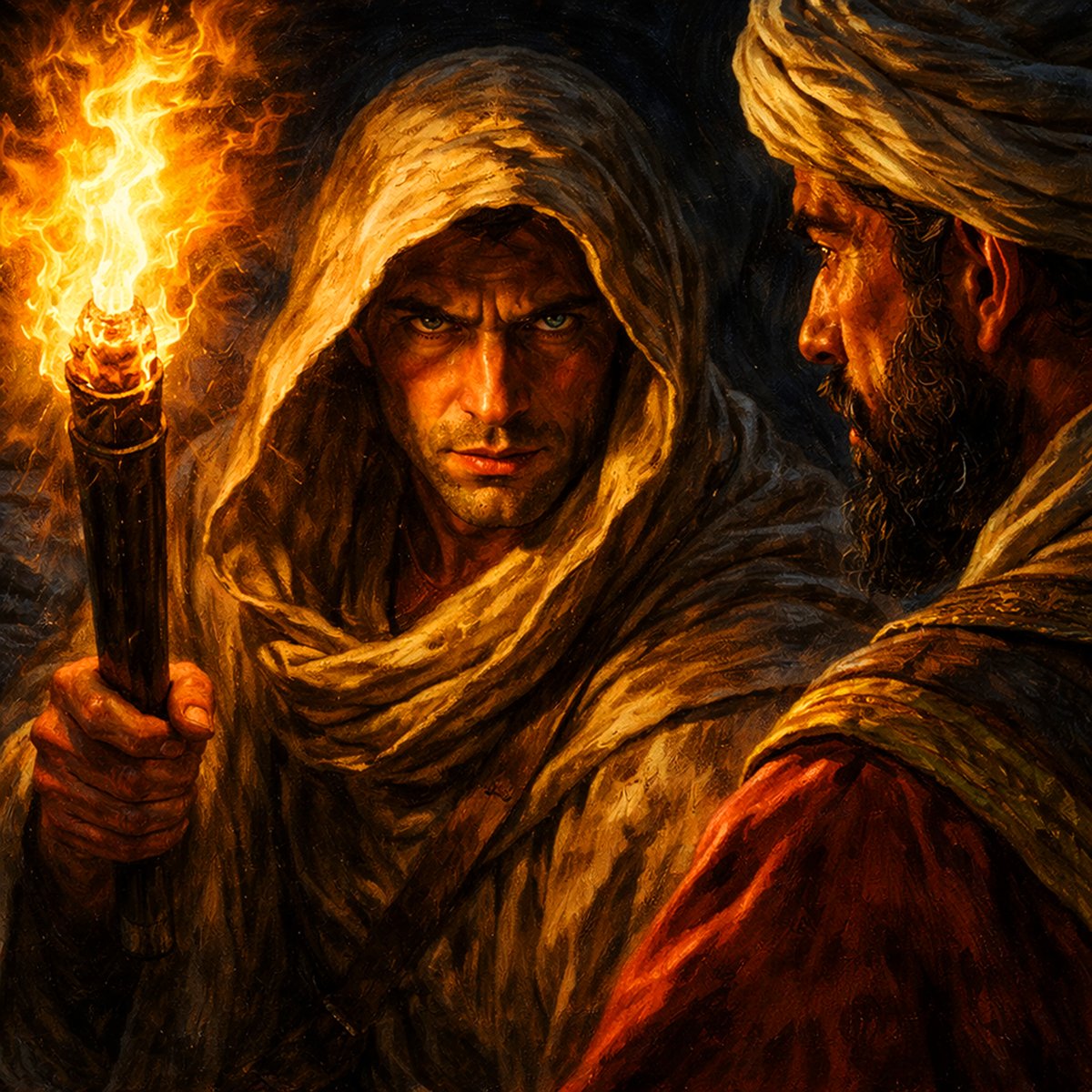
“You are an agent of El Karima, the white witch of the Doelaks,” says D’Arlan, and his words seem like a blow striking the strange Arab across the face. “You stir up treason among the Arabs who live in peace, you Doelak hound!”
The next moment, the Doelak’s dagger flashes dully through the air as he jerks it upward to slash D’Arlan’s artery along his neck.
But D’Arlan shoots him diagonally from below, under the throat, and as that knife reaches the climax of its arc, it falls slowly from the limp, dead hand of the tall Doelak.
The Arabs step back, terrified. D’Arlan casually steps over the Doelak’s body and approaches them. “Stay where you are!” he orders, and over his shoulder, he commands his men, “Disarm them.” As the men move closer, D’Arlan says, “The Arab who dares to move gets a bullet through his head.”
They stand motionless while their outdated weapons are taken from them, and when it is done, D’Arlan says, “You are like sheep... you allow yourselves to be led astray by this traitor... Where is El Abbas, the great man of El Wadak?”
They all turn their heads simultaneously and look somewhat behind them. D’Arlan follows their gaze. Then he turns cold... What he and the men had seen from a distance is a crude wooden cross, and hanging on that cross, which they had lost sight of in the consternation of the unexpected attack, is someone.
And suddenly, without anyone telling him, D’Arlan knows it is El Abbas... the friend of the Foreign Legion...
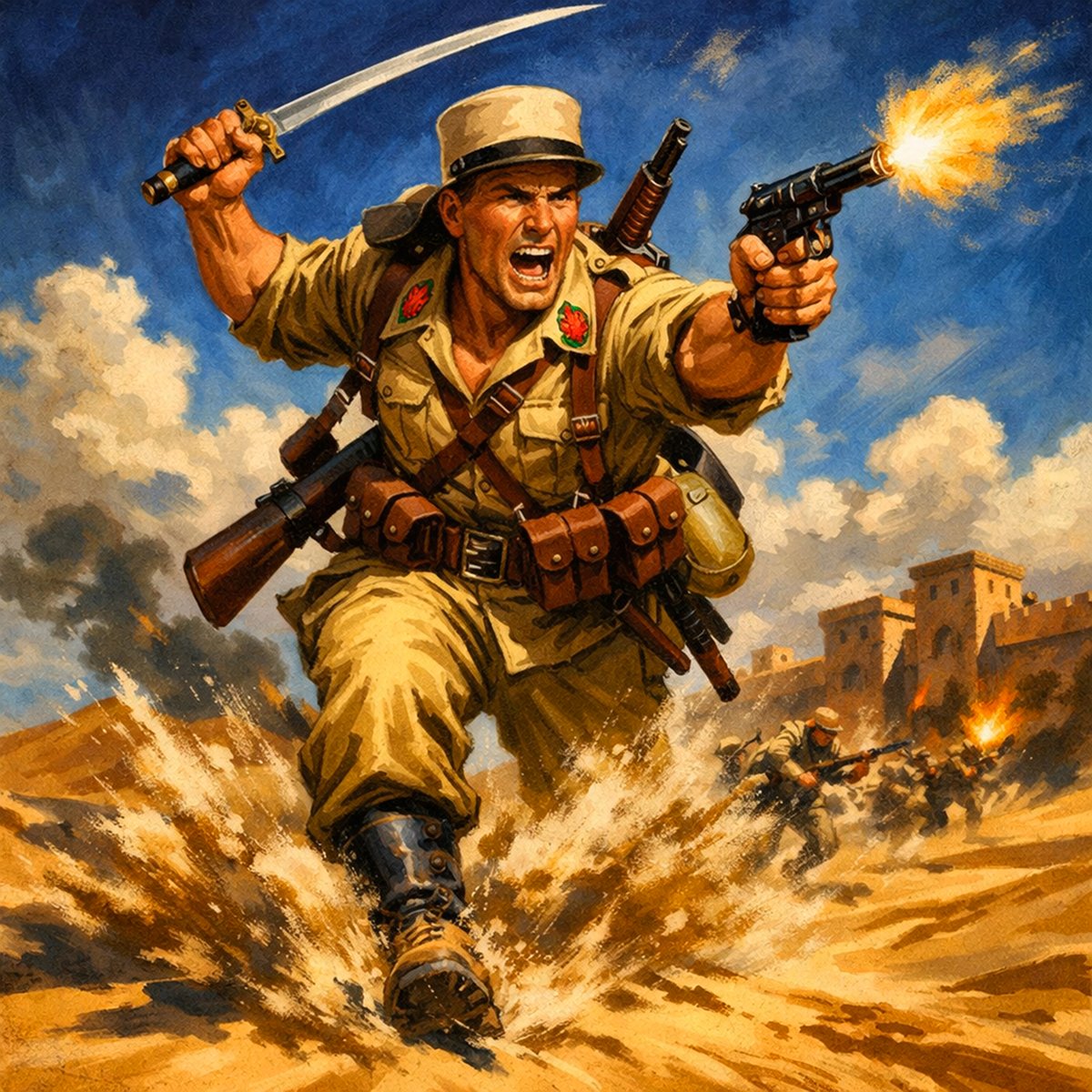
In The Scarlet Riders, Captain D’Arlan and Teuns Stegmann stumble upon a sight that defies belief. A patrol of Foreign Legionnaires slaughtering a friendly caravan. But these are no ordinary soldiers. They are impostors on a mission to ignite a holy war.
Behind the deception lies Heinz Dietrich, a ruthless slave trader, and Helmuth, a sinister hypnotist capable of turning loyal soldiers into mindless puppets. With the help of El Karima, the deadly “White Witch” of the Doelaks, they aim to frame the Legion for atrocities that will unite the Sahara against France.
Captured, disarmed, and subjected to brainwashing, Teuns Stegmann must fight the battle of his life. Not with a rifle, but with his will. With Fort Dini Salam surrounded by 20,000 vengeful warriors and modern gas guns, time is running out.
Can D’Arlan survive the Arab torture post to prove his innocence? Or will the desert be drowned in blood by the treachery of the Scarlet Riders?
This is another gripping installment in the Sahara Adventure Series by F.A. Venter (writing as Meiring Fouche). Originally published in the 1950s and loved by thousands, this classic tale of action, intrigue, and desert warfare is now available in English for the first time in e-book format.
★ Sluit Aan by Panther Ebooks op Substack ★
Ontvang eksklusiewe nuwe hoofstukke, agter-die-skerms navorsing en gratis e-boeke direk in jou e-pos.
Sluit Gratis Aan op Substack →Watch this Book Trailer
Enjoyed this preview?
With nearly 350 ebooks on Amazon across multiple genres, I have plenty more for you to read. Browse my full library on my Amazon Author Page HERE.
The adventure continues every week. Subscribe for free to keep up with the Legion and receive a FREE Sahara ebook as a welcome gift.
★ Sluit Aan by Panther Ebooks op Substack ★
Ontvang eksklusiewe nuwe hoofstukke, agter-die-skerms navorsing en gratis e-boeke direk in jou e-pos.
Sluit Gratis Aan op Substack →Copyright © 2026 Panther Ebooks. All rights reserved.