
★ Sluit Aan by Panther Ebooks op Substack ★
Ontvang eksklusiewe nuwe hoofstukke, agter-die-skerms navorsing en gratis e-boeke direk in jou e-pos.
Sluit Gratis Aan op Substack →Below is a free preview of the opening two chapters of Flames across the Sands.
FLAMES ACROSS THE SANDS
Chapter 1: A Perfumed Letter
In the large dormitory of the fortress Dini Salam in the Southern Sahara, there is palpable excitement this afternoon. The heat is intense, as always. The flies are a torment, as is the case every day, yet it seems as though the men do not feel the monotony of this part of the Sahara as acutely this afternoon as usual.
Actually, this is now the time for rest. Ordinarily, the men would now be lying half-naked on their cots, hands beneath their sweating heads, swatting and slapping at bothersome flies, grumbling about the heat. Some would be dozing, and others would have taken refuge in the showers.
But this afternoon, there is an excited, almost enthusiastic hum in the dormitory. The reason is that it is mail day. Most men in the garrison of Dini Salam hardly ever receive a letter, because the men in the Foreign Legion are mostly exiles, fugitives from civilisation, and criminals who have thoroughly severed their ties with civilisation. But among them, there are still a number who receive a letter from time to time, or perhaps a newspaper forwarded by a family relation or a well-wisher.
The fact that it is mail day is not the sole reason for the subdued excitement prevailing there. Actually, the main reason for it is the fact that quite a number of the men will soon be departing for the coast on their annual leave. Then, most of them will go to Algiers, the large, bustling, and somewhat dangerous city on the Mediterranean Sea. Although it is still a good two weeks before the men depart, most of them have already packed their few personal belongings. There is always the greatest excitement when the men get a chance to escape from this perdition of heat and flies, from this inhospitable desert where they must sit year in and year out. There is particular excitement around the black cot of the tall, strongly built, blond Legionnaire with the heavy shoulders and the clear blue eyes. He is the South African Teuns Stegmann. Teuns is lying on his back on his cot, his tanned and muscular torso bare, his two boots conspicuously resting on the lower rail of the cot.
Probably a good eight or ten legionnaires are standing around Teuns’s cot, because Teuns Stegmann received a letter today.
This in itself is a noteworthy event because the South African has been in the Legion for so long that he has somewhat grown distant from his people in South Africa. They no longer write to him very often.
Yet today he received a letter. An extraordinary, inexplicable, and delightful letter.
The letter does not come from distant South Africa. Nor does it come from Europe.
The letter that Teuns Stegmann has now read through repeatedly comes from Algiers!
It is not a letter from an acquaintance or a family relation. It is not a letter from a man.
It is a letter from an unknown woman!
Hence the men crowd so around Teuns, his good friends, the German Fritz Mundt, the blond Englishman Jack Ritchie, the large Pole Podolski, and the small Italian Petacci, besides quite a number of curious onlookers.
It is quite a spectacle here around Teuns’s bed. Petacci, the harlequin, leans over and smells the letter. Then he closes his eyes, makes a little circle with his fingers, steps back, and executes a polka turn. “Perfume!” exclaims the Italian, looking as if he is in ecstasy. “Feminine perfume!”
Those standing around are also aware of the sharp, almost irresistible delightfulness of the perfume emanating from the letter.
They stare at it as if it were something they had not seen in years. Because this is a fine letter. Not only does it exude the delightful scent of feminine perfume, but it is so neat and delicate. It is written on the most beautiful purple writing paper. Thin, almost translucent. The envelope is likewise small and feminine, and the handwriting on it is firm and clear. It shows evidence of purposefulness and strength of character.
Even the large Fritz Mundt, known as the bull of the French Foreign Legion, cannot resist the romance of the letter. He takes it delicately from Teuns’s long, strong fingers, looks at it, smells it, and closes his eyes as if he has just begun to drink from a large tankard of frothy Munchener beer.
Then Fritz places the letter just as solemnly back into Teuns’s outstretched hand. But scarcely has Teuns got the letter back when Jack Ritchie takes it again. He glances quickly at the beautiful handwriting, then turns it over and looks at the signature.
The blond Englishman glares meaningfully at Teuns. “And where do you know her from?” he asks.
Teuns shakes his blond head. “I don’t know her,” he says with a short laugh.
“Come now, come now, mon ami,” says Podolski. “Don’t try to tell us that lemons are figs! You must know her, otherwise she wouldn’t have written to you.”
Teuns suddenly sits upright, his bare shoulders against the headboard of his cot. “I tell you I don’t know her,” he says. “This is the first time I’ve heard the name.”
“Delightful prospect,” observes Jack Ritchie. “Now you don’t even have to search for names and addresses when we leave for Algiers in two weeks.”
“Lucky devil,” says Petacci. “It seems the gods arrange everything for you in advance. If her handwriting looks like this, what must she look like!”
And Petacci’s utterance immediately gives rise to large-scale speculation and conjecture. They come and sit here with Teuns on the bed, and each gives his impression of what this girl, who wrote a letter to an unknown soldier in the French Foreign Legion, must look like. Fritz Mundt imagines her as a blonde with glowing cheeks and bright blue eyes. Petacci opines that she is dark and striking, with jet-black hair and burning eyes. Jack Ritchie, in turn, imagines her looking like an Irish beauty, with blackish hair and deep blue eyes.
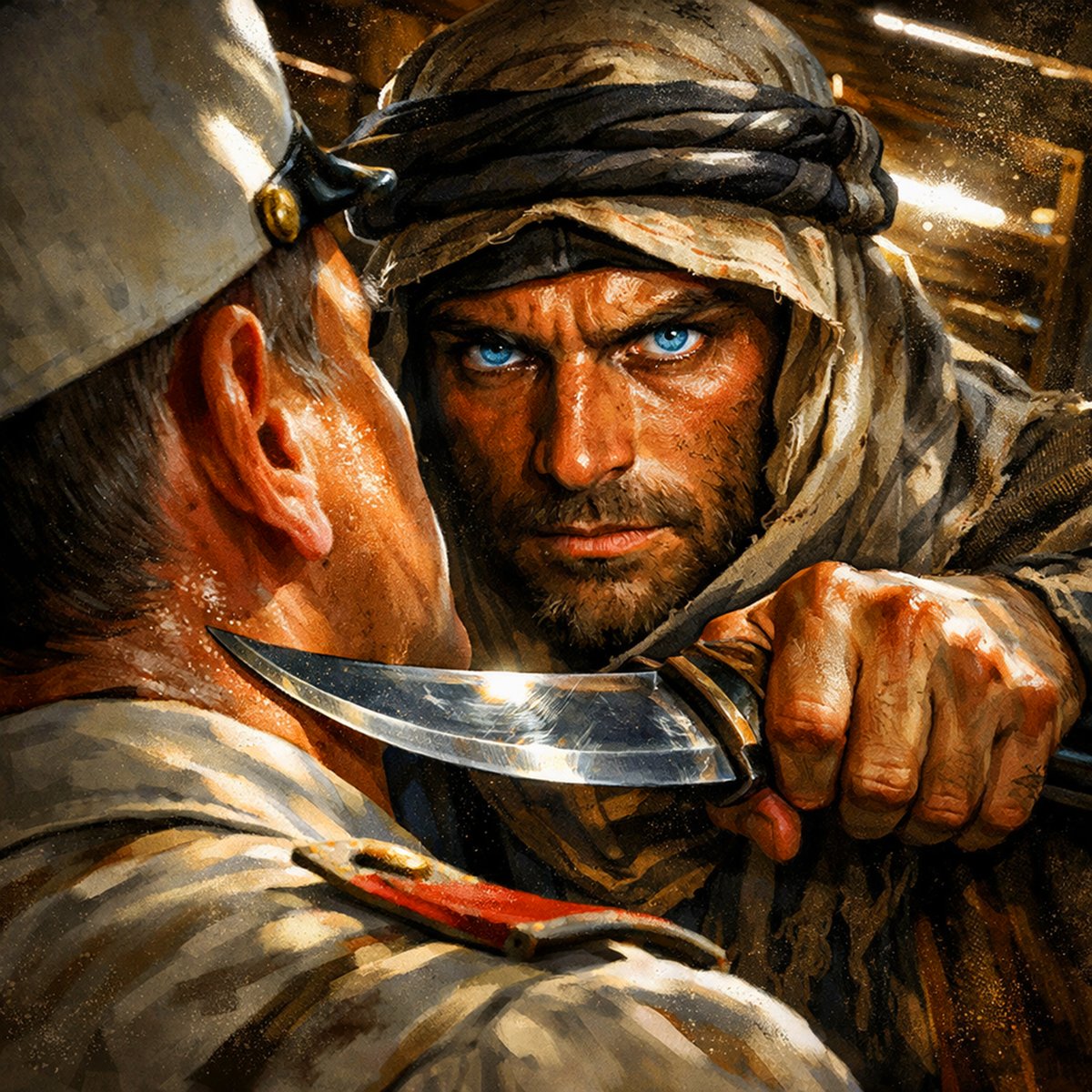
But Teuns, Teuns has his own image of the girl. He imagines her having reddish hair, with greenish eyes.
And as he thinks about it, he marvels anew at this letter. He has taken it from Jack Ritchie and is reading it for the umpteenth time. He looks at the clear address which is apparently in one of the prominent and affluent residential areas of Algiers. Then he reads the salutation, and then the letter.
It begins somewhat formally.
Dear Legionnaire Stegmann.
Then it continues. “You will surely be surprised to receive a letter from a stranger like me. However, I am writing to you because I have a very special request to make of you. I wish to ask that when you next come to Algiers, you would certainly pay me a visit at the above address.
“I am sure you will be surprised by the request and will surely wonder why I ask this. The reason cannot be provided in this letter, except to say that it is a matter of urgent importance. Not only for you personally, but also for the entire French Foreign Legion.
“You will surely also wonder why I am writing specifically to you and where I obtained your name and address. I will provide you with that information when I see you, and I hope that will be in the near future.
“May I say that this matter is of such importance that it will be worth your while perhaps to obtain special leave.
“I hope you do not disappoint me, Legionnaire. I address this request to you in great earnestness and also with deep urgency.
“With best regards, Elsa Moram.”
Elsa Moram? Teuns thinks. Has he seen her before, or has he never seen her? No, he hasn’t, he decides. Where on earth would she have got his name, and how does she know he is stationed at Dini Salam? And this matter she wants to discuss with him, what on earth could it be?
Moram? He frowns and delves into the past. For a moment, he imagines he has touched upon something, something related to the name Moram. But the vague memory immediately evaporates, and he cannot grasp it, although he is certain that the name Moram has piqued his interest in a peculiar way.
He takes the letter, moves it slowly past his nose, once more savouring the beneficial, pure, fresh perfume, folds it up, and puts it back in the envelope.
“Are you going to look her up, mon ami?” asks Petacci.
“Of course, I’m going to look her up,” answers Teuns. “Do you think I’m out of my mind?”
“And if you don’t get along with her, will you give us a chance?” asks Fritz Mundt.
Teuns just smiles and does not answer. He is preoccupied with this peculiar thing, this letter from a complete stranger who has directed such a particular request to him.
He stands up and goes to place the letter in the inner pocket of his uniform jacket. There he pauses again, and for a moment, he tries to conjure an image of the woman. Elsa Moram. Is she young or is she old? Is she attractive or perhaps repulsively ugly?
He feels a slight chill run down his spine. Could something be lurking behind this? He, Teuns, must always be on his guard when in Algiers, because there are certain Arabs who have already become acquainted with his name, who know of him, and who would take his life at the slightest provocation. Would it be wise for him to go to this woman?
In the desert, he has already learned that a woman can often be the most dangerous enemy. Far more cunning, far more refined than a man. She can conquer you gently and then destroy you. He has seen it so often.
He becomes aware that someone is standing just behind him, and when he turns around, he looks straight into the face of Jack Ritchie.
“I wouldn’t take it all at face value if I were you, mon ami,” says Jack. “Especially knowing what you know, it could be a trap. Don’t you find it peculiar that you receive this letter just two weeks before we leave on leave?”
“Yes, rather,” says Teuns. “That is one aspect of the matter that doesn’t sit well with me. It fits too neatly.”
“I would think twice before visiting this woman, if I were you,” warns Jack. “In any case, I don’t think you should go alone, and I also don’t think you should go unarmed.” Teuns leans his elbow against the wall. There is a deep frown on his handsome forehead. “Moram?” he says again. Then he looks sideways at Jack. “Moram. Doesn’t that remind you of something? Of an incident or a person or something of that nature?”
Jack Ritchie rubs his neck. “Yes, it reminds me of something,” he says. “But I don’t know what. It’s as if the name rings a bell somewhere in my brain. But as soon as I try to grasp it, it disappears again.”
“It’s exactly the same with me,” says Teuns. “I’ve heard the name somewhere before. Something happened to someone bearing that name, but I can’t remember what.”
“In any case,” says Jack, “if you wish, I’ll go with you when you visit the lady. And if I were you, I’d take one or two more men along. You know what Algiers is like. A legionnaire’s life isn’t worth much there.”
Teuns Stegmann smiles at his comrade. “I’ll take the necessary precautions,” he says a little nonchalantly, “but one thing I tell you, Jack Ritchie, if she’s a beauty, then you guys make yourselves scarce, danger or no danger...”
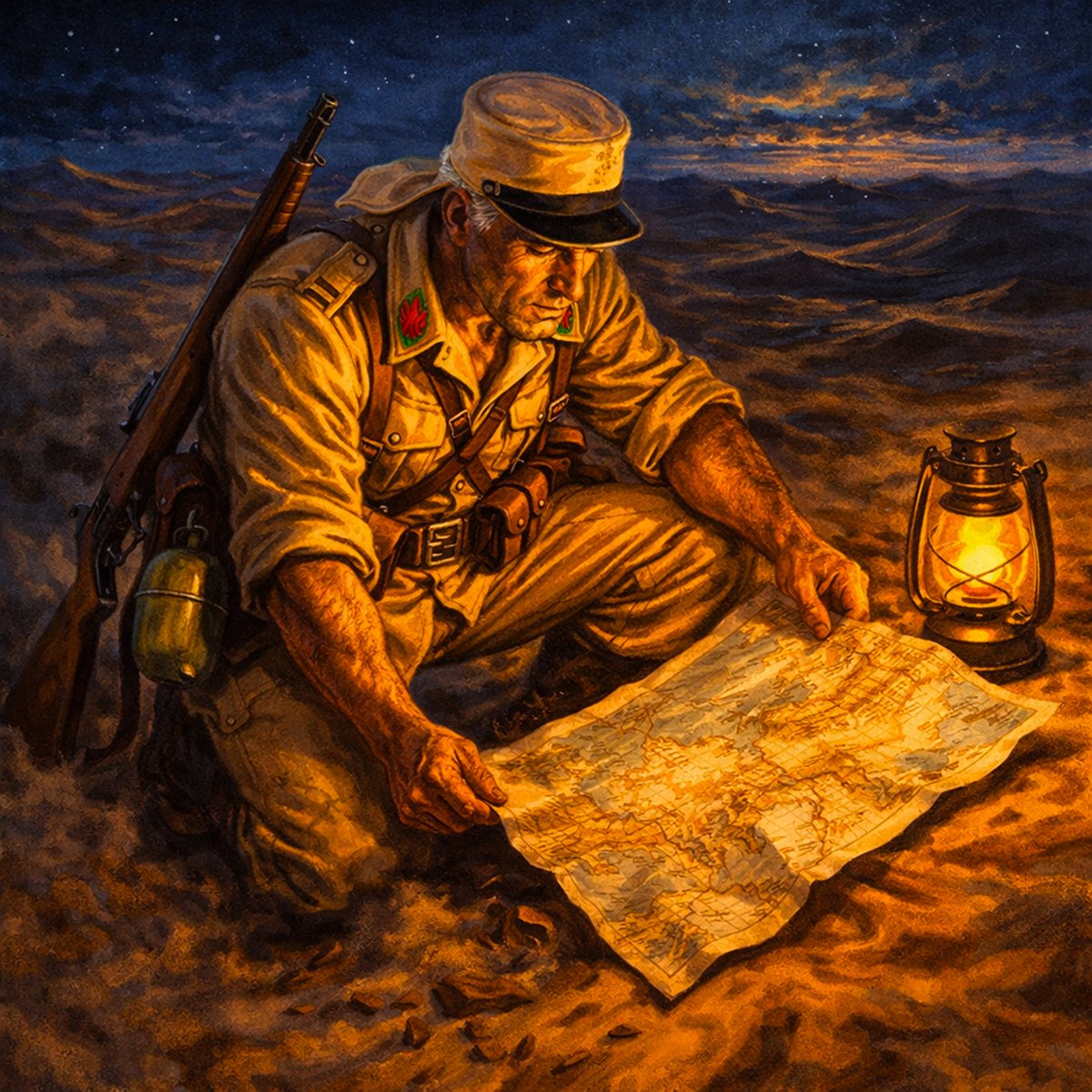
Chapter 2
TALE OF A FAIR WOMAN
It is a long, elegant street in one of the most beautiful residential areas of Algiers. It is brightly lit, and on either side stand large and impressive apartment buildings. It is known as the Rue Marten.
It is still reasonably early in the evening, and it is exactly fifteen days since Teuns Stegmann received the rather peculiar letter from a girl named Elsa Moram. Five men are walking down the street. Teuns, Jack Ritchie, Fritz Mundt, Podolski, and Petacci. They are in a cheerful, yet somewhat anticipatory, excited mood. They feel free and invigorated because they are on leave, and they know that this is a time for them of relaxation, of nightclubs, attractive bars, a bit of swimming in the sea, and especially women. This is a time of sleeping soundly and sleeping late. It is the time when one feels human again within civilisation.
Therefore, there is a new spring in their step and a new tone in their voices as they stroll carefree down the beautiful street with its rows of neatly pruned trees on either side.
They stop in front of Rue Marten 330. It is a handsome apartment building, evidently a luxury building. Teuns takes the purple letter out of his pocket again, opens it, and looks at the address. Yes, this is the block of flats. He looks again at the apartment number that Elsa Moram provided in the letter, and then they walk inside. The concierge, clearly a Frenchman, greets them friendly and directs them to where they can find the room.
They walk up two flights of stairs, then take a long corridor towards the back of the building, and there they find the number on the door.
It is number 152.
Like schoolboys about to get into mischief, the group stands before the apartment door in the long, quiet corridor. It is as if they do not really know what to do now. Teuns is the first to move. He presses the button, and they hear the bell ring inside.
Slightly tense, they stand there, and Teuns feels the small, flat revolver in his inner pocket. They had all contributed to the purchase of this revolver, for none of them wanted the South African to undertake this adventure unarmed. They particularly dislike this location, as the apartment is clearly right at the back of the building, and when they looked out of a window, they looked down into a dark courtyard.
It is one of those dark alleys for which Algiers is so notorious and in which all sorts of nefarious activities so often take place. When they hear the quick footsteps inside, they all stiffen, and Teuns nervously touches his neck.
The door opens, and the five men practically gasp for breath. Before them stands a girl in semi-formal evening wear. She is wearing a shortish frock of ballerina length, black, close-fitting, and shoulderless. None of them knows exactly what they become aware of first. Her gleaming raven-black hair, or her sharp, sparkling black eyes, or the brown sheen of her shoulders, or the delicate allure of her lips...
Her skin has the colour of olive and seems to be illuminated by light from within. Her entire persona is overwhelming, for she is one of the most beautiful women any of them has ever seen. She possesses not only physical beauty, her body is not only exquisitely built, there is an aura emanating from her that strikes you and carries you away.
“Yes, Gentlemen?” she asks, her voice deep and melodious.
“I am Legionnaire Stegmann,” says Teuns, smiling at her. “I received a letter from you. Are you Elsa Moram?”
“My dear Legionnaire!” she says, stepping over the threshold and extending her hand, on which a costly bracelet glitters. “I am so grateful to see you. Yes, I am Elsa Moram.” Then she looks a little uncertainly at the others. “To tell the truth, I was expecting you alone.”
“My comrades,” Teuns replies meaningfully, “just came along to make sure I found the place.” There is a command in his blue eyes as he looks in turn at Fritz, Jack, Podolski, and Petacci. They bow charmingly, then turn on their heels and walk down the long corridor.
Elsa Moram smiles sweetly at Teuns again, then steps aside, makes a graceful little gesture with her hand, and invites him inside.
Teuns Stegmann walks slowly inside, remaining on his guard. He has his hand in his right jacket pocket, where he has moved the small revolver. It feels small and hard and cool in his hand.
Suddenly, he finds himself in a beautiful, tasteful living room, furnished in the Swedish style, with beautiful original paintings on the walls and with the most exquisite floral arrangements he has ever seen.
“Please sit down, Legionnaire,” invites Elsa Moram, gesturing towards one of the luxurious armchairs. She comes and sits near him, and again the scent of her perfume strikes him forcefully. Yes, it must be her, because it is the same perfume.
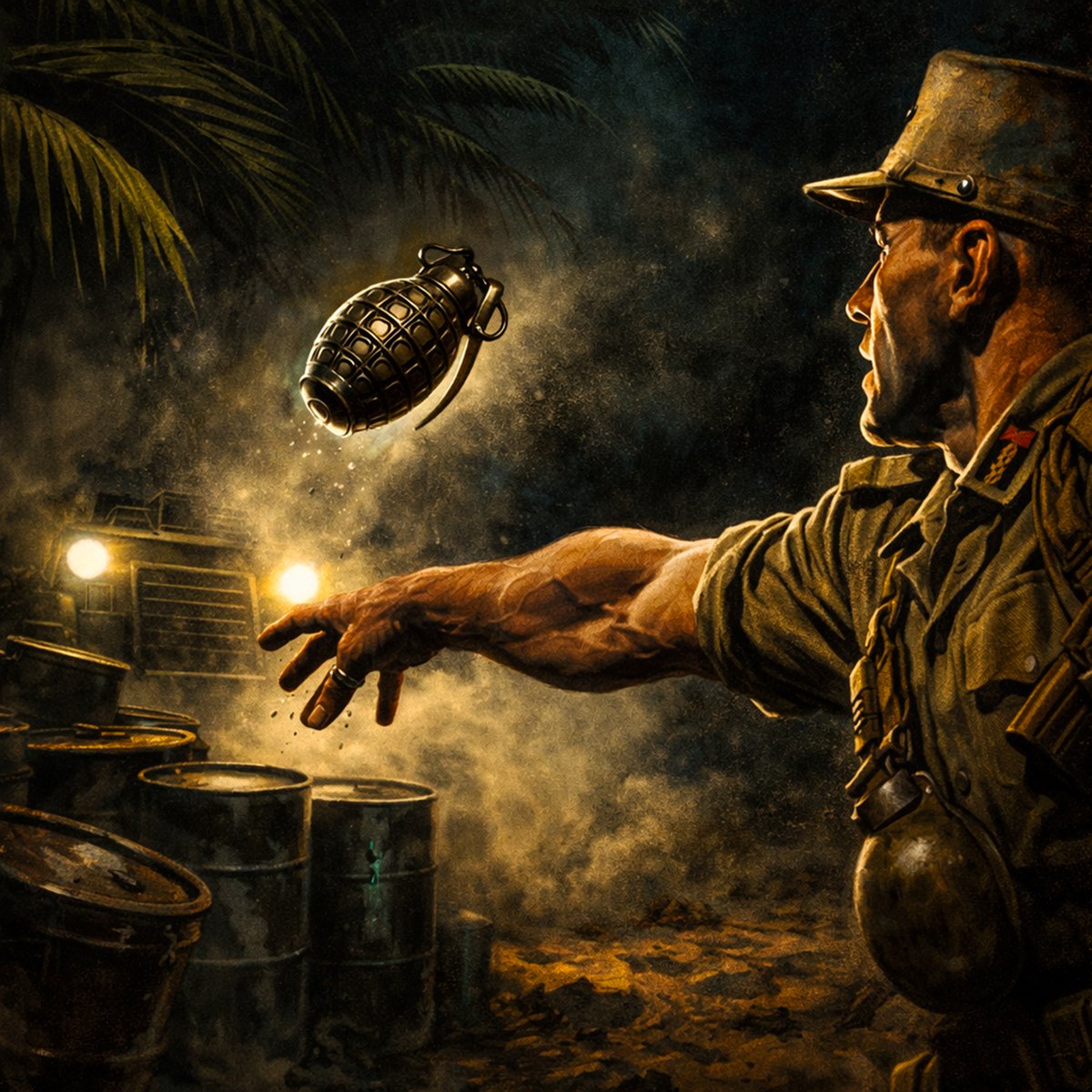
For a moment, he looks intently at her, trying to size her up. He finds it difficult to concentrate and draw conclusions, because her body is so supple, so sublime, so warmly feminine, and so close to him. The parting in her hair is perfect, and the jet-black hair shines and lives under the light of the standard lamp. For a moment, he looks at her expensive earrings and then at her slender hands lying like two excited wings on her lap.
“I am grateful that you came, Legionnaire,” says Elsa Moram, and there is something intimate and softly feminine in her voice. Then she is suddenly upright. “A little cognac? Or would you prefer a little wine?”
“A little light wine, if I may,” answers Teuns. “Sweet, dry, or medium?”
Her beautiful head tilts, and the smile transforms her into a beautiful, almost irresistible feminine image.
“Medium, thank you,” says Teuns.
She moves towards the buffet, seemingly gliding. It does not look as if she places her feet on the expensive carpet. Even her movement possesses a strange charm that captivates him, forcing him to compel himself once more to stay alert and on guard.
She pours herself a small glass of port and for him a glass of semi-dry wine.
She raises her glass, smiles at him, and says again. “I am so grateful that you came, Legionnaire, and so soon too. I imagined I might have had to wait for months, and that would have been very unsatisfactory.”
Teuns looks hard at her, and she is struck by the clarity and urgency in his eyes.
“May I ask,” he says, “what the purpose of this invitation is?”
“Are you suspicious?” asks Elsa Moram.
“A man in the Foreign Legion is always suspicious in Algiers,” he answers, looking around the room. Nearby, a door leads out. He assumes it leads to a bedroom. A little further to the left, another door leads out, and he deduces that it leads to the kitchen.
“I don’t blame you,” says Elsa. “Algiers is a dangerous city today, especially for the French Foreign Legion.” For a few moments, they just stare intently at each other. Teuns waits for her to speak again, for she is the one who must explain.
“Doesn’t my name mean anything to you?” asks Elsa.
“Since receiving your letter,” answers Teuns, “I have been grappling with it. Your name means something to me, but I cannot grasp it. It has something to do with a person or an event. But what it is, I cannot determine.”
“I will help you,” says Elsa. “Do you still remember a legionnaire named Emil Moram?”
Teuns looks down into the golden glow of the wine. She sees how his eyes become rigid. How wrinkles form on his forehead, how abstraction makes his eyes fade. Then he slowly looks up at her, and she sees how something grows from his innermost being and takes shape.
“Emil Moram?” His voice is low and soft. “Legionnaire Emil Moram?” He points his finger at her as if trying to ascertain something.
“That is correct,” she says. “Private Moram was my twin brother.”
“Your twin brother?”
“My twin brother,” she says. “Can you still remember how he died?”
“I remember. I remember it now,” says Teuns. “Strange that I couldn’t remember it earlier, but the name Emil held much more significance for me than Moram. We only knew him as Emil.” A shudder seems to pass through the body of the large South African, causing the delicate glass between his fingers to tremble. She looks at him silently, waiting.
For a moment, he even closes his eyes, for the full image of Emil Moram now stabs and twists through his memory. It was many years ago, he recalls. He had barely been in the Legion then, when they had that bloody skirmish in the desert with the Doelak Arabs. It was far south of Fort Laval, where he and Emil had served together as recruits in the garrison.
Somehow, Moram and a few other men had become separated from the main force. The Arabs captured them and tortured them to death in the traditional manner. Moram and five others were staked out on the sand, their lips and eyelids cut off. Their ears were also removed. The bodies were horrifically mutilated in other ways as well.
Vaguely, Teuns relives the agony of this memory until Elsa Moram speaks to him again. “Do you still remember it, Legionnaire? Do you still remember the cruelty of it?”
“I remember. I remember it now,” he says with a soft sigh.
“It was horrific, wasn’t it, Legionnaire?”
“It was more than horrific,” answers Teuns. “It was bestial and hideous.” Then he looks up into her eyes. “And he was your brother? He was your twin brother?”
She just nods, and from her trembling lips, from the mistiness in her eyes, he sees that the memory is momentarily too much for her. She quickly brings the glass to her lips as if seeking solace in it and drains the port wine in one gulp.
“Strange,” says Elsa Moram, “when I sought contact with the Foreign Legion recently, I had forgotten your name too. I read through his old letters, and the name Teuns Stegmann appeared so often in them. I deduced that you must be a special man. He apparently harboured a quiet but deep admiration for you. So I just hoped you were still in the Foreign Legion. I wrote to Fort Laval, but when I received no reply from there, I wrote to the fortress Dini Salam. And now my efforts have been rewarded.”
“I still don’t quite understand,” says Teuns. “What does the death of your late brother have to do with this visit?”
“Perhaps I should explain,” says Elsa. “You can surely understand that today I am an embittered enemy of the Arabs. Since my brother’s death, I have done everything, everything in my power to harm the Arabs. I have often exposed myself to serious danger. I am associated with one of the largest nightclubs here in Algiers, a nightclub visited not only by prominent Frenchmen but also by prominent Arabs and Algerians.” She smiles a little wistfully, deepening her beauty. “I have even gone so far,” says Elsa, “as to make certain Arab sheikhs fall in love with me. I have managed to get at least three sheikhs to ask me to be their wife.” “That is a remarkable achievement,” says Teuns.
Suddenly, there is bitterness in her eyes. “They fill me with revulsion,” she says. “I have brought them to this apartment, I have gotten them drunk, and here I have extracted many secrets from them. Secrets which I immediately passed on to the high command of the French Foreign Legion.” She smiles, her eyes sparkle, and she looks triumphant. “In at least one case,” says Elsa, “information I provided led to the near annihilation of an entire Arab army. That gives me great satisfaction.”
“I can well understand that,” answers Teuns. “I am in the Foreign Legion for the same reason. After the Second World War, my brother, who was a pilot in the South African Air Force, crashed in the Western Desert and vanished among the Arabs. We established that much. But what became of him, we do not know to this day. I am in the Foreign Legion to avenge myself on the Arabs.”
“Then we can talk freely,” says Elsa Moram. “Because then we both hate.” She stands up, goes to refill her glass, and returns.
For a little while, she looks silently at Teuns, seeing that he awaits a further unfolding of her story.
“I possess another secret, Legionnaire Stegmann,” says Elsa Moram. “Unfortunately, I don’t know many details. I have already contacted the French high command, but they laugh at me. I told them what I know. I told them about a fantastic scheme among the Arabs, surely the greatest threat the French Foreign Legion has ever faced in the Sahara. But it is so fantastic that they don’t believe me. As a last resort, I contacted you, because perhaps you will know how to make them understand these things. Another glass of wine?”
“Yes, thank you,” answers Teuns.
He watches her as she walks to the buffet, wondering what adventure this beautiful woman now wants to lead him into.
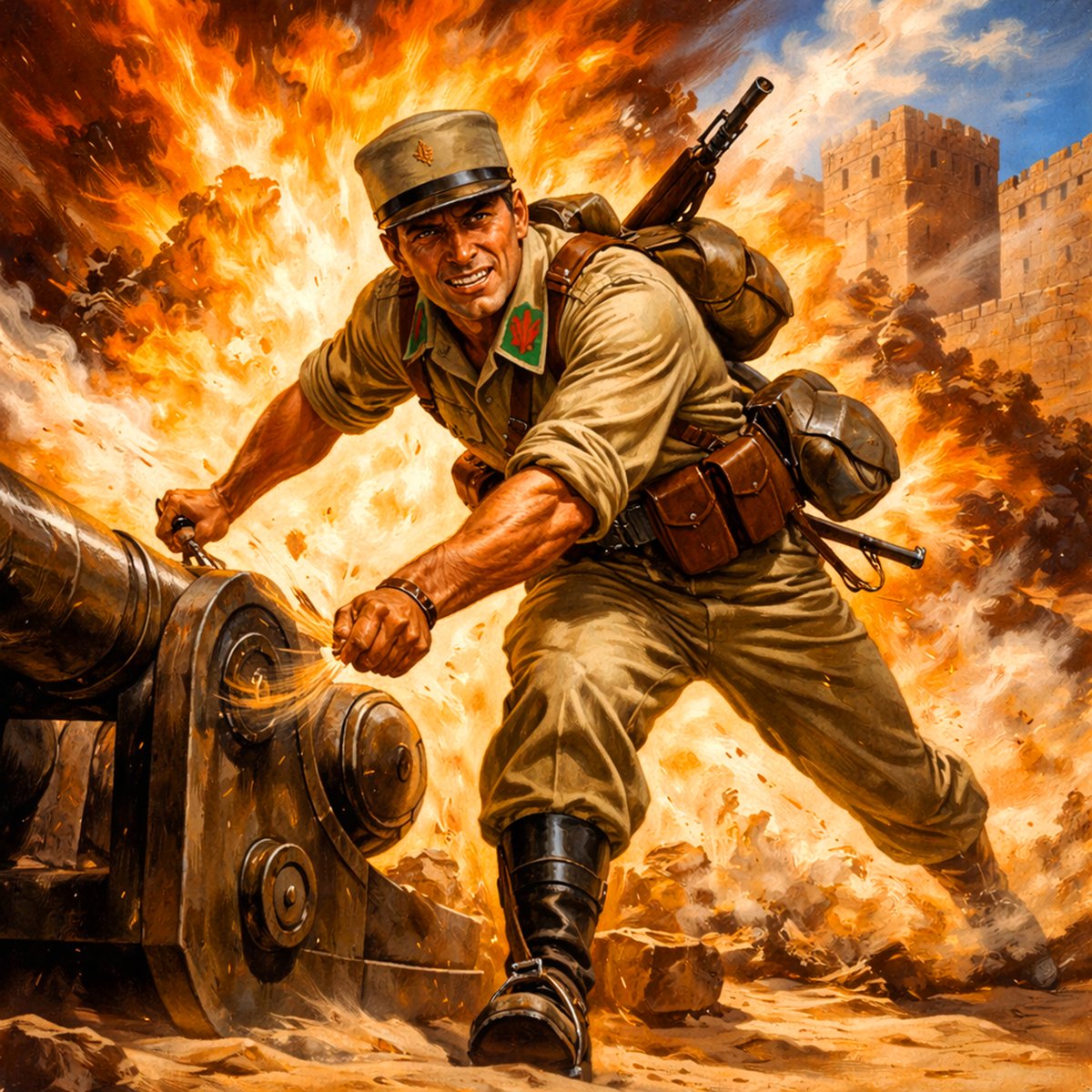
In Flames Across the Sands, Teuns Stegmann and his comrades are pulled into a high-stakes mission that goes far beyond the usual desert patrols.
There are whispers of a rocket base hidden in the deep desert. Secret caravans. And a Russian general named Rogoff who will stop at nothing to keep his project hidden.
Teuns Stegmann knows the desert is cruel. He knows the Arabs are fierce. But he has never encountered a threat like this, or a woman like Elsa Moram, who is willing to pay the ultimate price for vengeance.
The chase is on. But will they reach the rocket base in time... or will they perish in the Flames Across the Sands?
This is another gripping installment in the Sahara Adventure Series by F.A. Venter (writing as Meiring Fouche). Originally published in the 1950s and loved by thousands, this classic tale of action, intrigue, and desert warfare is now available in English for the first time in e-book format.
★ Sluit Aan by Panther Ebooks op Substack ★
Ontvang eksklusiewe nuwe hoofstukke, agter-die-skerms navorsing en gratis e-boeke direk in jou e-pos.
Sluit Gratis Aan op Substack →Watch the Trailer
Experience the heat, the mystery, and the danger of the Sahara:
Enjoyed this preview?
With nearly 350 ebooks on Amazon across multiple genres, I have plenty more for you to read. Browse my full library on my Amazon Author Page HERE.
The adventure continues every week. Subscribe for free to keep up with the Legion and receive a FREE Sahara ebook as a welcome gift.
★ Sluit Aan by Panther Ebooks op Substack ★
Ontvang eksklusiewe nuwe hoofstukke, agter-die-skerms navorsing en gratis e-boeke direk in jou e-pos.
Sluit Gratis Aan op Substack →Copyright © 2026 Panther Ebooks. All rights reserved.